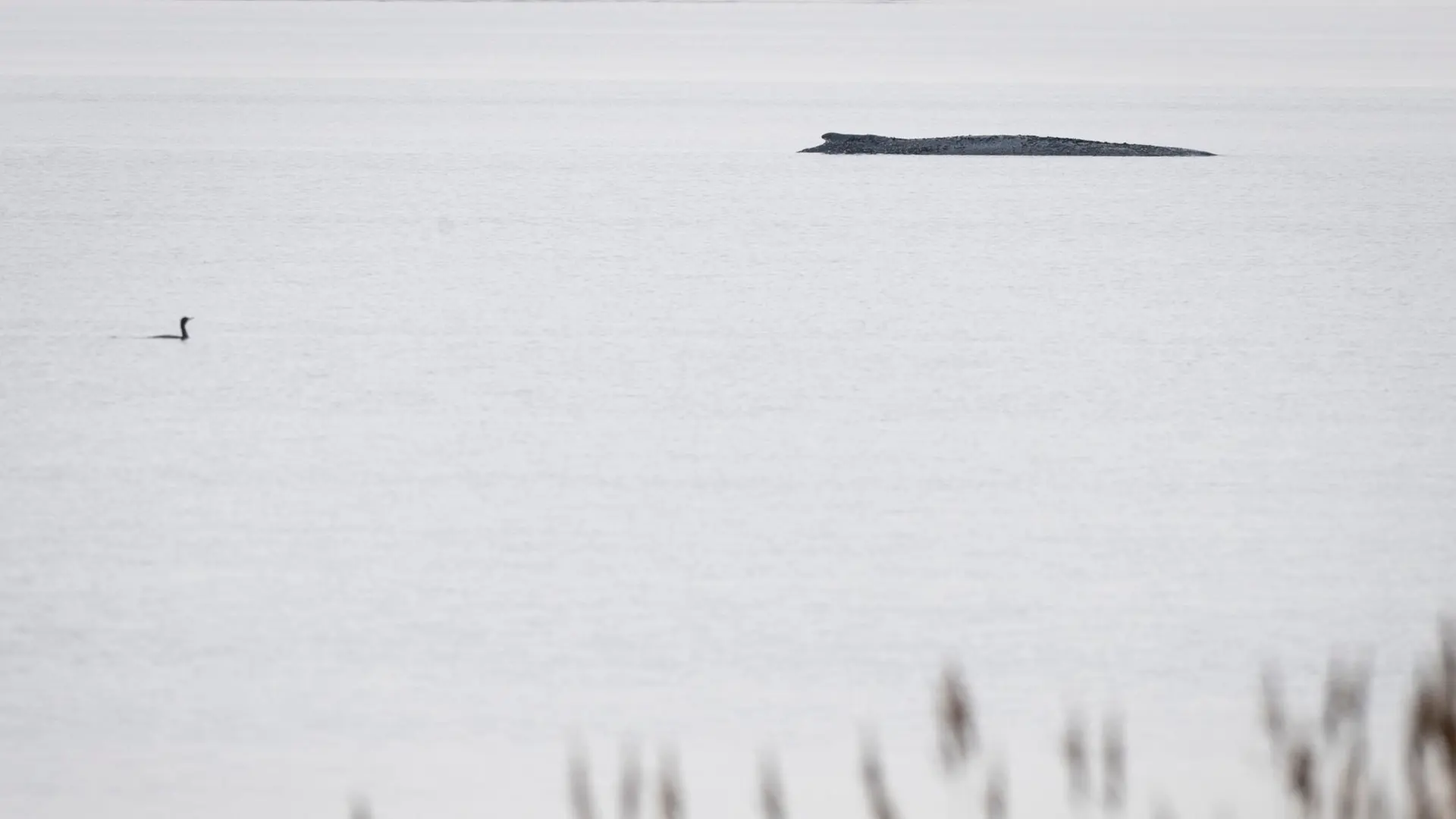
The Baltic Sea Whale Trap: Understanding Why Humpbacks Get Stranded and Die
The majestic humpback whale (
Megaptera novaeanglieae) is an icon of the open ocean, known for its acrobatic breaches and haunting songs. Yet, occasionally, these giants venture into the confines of the Baltic Sea, a journey that almost invariably ends in tragedy. The recent case of a young humpback, affectionately dubbed "Timmy," which repeatedly stranded and eventually succumbed, brought into sharp focus the harsh realities and complex challenges surrounding such incidents. These occurrences are not isolated; they represent a recurring phenomenon where the Baltic, for all its beauty, transforms into a fatal snare for these magnificent marine mammals, leading to the heartbreaking sight of a
Buckelwal Ostsee Tot – a dead humpback in the Baltic Sea.
Why Humpbacks Wander into the Baltic Trap: A Tale of Prey and Misnavigation
The journey of a humpback whale into the Baltic Sea is often a matter of irresistible temptation. These filter feeders are driven by an insatiable appetite, and the allure of rich feeding grounds can sometimes lead them astray. Experts suggest that whales, following dense shoals of herring or other small fish, are drawn from the nutrient-rich North Sea through the narrow Danish straits and into the shallower, brackish waters of the Baltic. This often happens within a "North Sea water bubble" – a mass of colder, saltier North Sea water that penetrates the Baltic, carrying with it the prey and, inadvertently, the predators.
For a whale accustomed to the vast, deep, and open expanses of the Atlantic, the Baltic Sea presents an entirely different, and ultimately confusing, environment. The Baltic is a semi-enclosed sea, characterized by:
- Shallower Depths: Significantly less profound than the open ocean, limiting maneuverability for large cetaceans.
- Brackish Water: A mix of freshwater and saltwater, which is less saline than the oceans, potentially affecting a whale's buoyancy and overall physiological comfort.
- Weak Tides: Unlike the strong tidal currents of the North Sea, the Baltic experiences minimal tidal range, offering little assistance for a stranded whale to refloat.
Crucially, Atlantic whales do not possess the ingrained navigational "concept" to escape such a cul-de-sac. Their highly evolved acoustic and spatial memory systems are designed for oceanic expanses, not the intricate and shallow geography of an inland sea. Once deep within the Baltic, the migratory impulses that might normally guide them back to open water seem to fail, often leading them further east into ever-shallower and more perilous waters. This navigational breakdown, combined with a relentless pursuit of prey, sets the stage for the tragic events that follow, as explored further in
The Tragic Fate of Timmy: Why Humpback Whales Die in the Baltic Sea.
The Grim Reality of Stranding: Weakness, Disorientation, and the Inevitable
A whale's initial entry into the Baltic is often undetected. It's usually only when the animal shows signs of distress, such as repeated strandings, that its presence becomes widely known. When "Timmy" was first sighted, it quickly became apparent that the young humpback was weakened and disoriented. Its repeated grounding on sandbanks, such as its first known stranding at Timmendorfer Strand and subsequent re-stranding near Wismar on the aptly named "Walfisch" sandbank, were clear indicators of its deteriorating condition. Instead of turning back, the disoriented whale continued its fateful journey eastward, deeper into the trap.
The physiological toll on a large marine mammal caught in the Baltic is immense. Away from its natural foraging grounds, the food source may become insufficient or unsustainable for its massive energy requirements. The stress of the unfamiliar environment, the noise pollution from boats (which can further disorient an acoustically sensitive creature), and the sheer physical exertion of navigating shallow waters combine to exhaust the animal.
Once stranded, a whale's situation rapidly deteriorates. Their immense weight, which is supported by buoyancy in water, crushes their internal organs when they lie on land. Their skin, adapted for constant immersion, can quickly dry out and crack, leading to severe dehydration and sunburn. Furthermore, the sand itself acts like a powerful suction cup, making it incredibly difficult for the whale to free itself even if the water level rises slightly. This combination of factors almost invariably leads to a
Buckelwal Ostsee Tot scenario, a grim outcome that marine biologists and rescue teams have come to anticipate.
The Impossible Rescue: Why Giant Cetaceans Cannot Be Saved
When a whale strands, the instinct to help is powerful. However, the reality of rescuing a large cetacean like a humpback whale is incredibly complex, and tragically, often impossible. While smaller marine mammals, such as the porpoises (up to 1.8 meters) common along German coasts, sometimes benefit from human intervention, the scale of a humpback whale (which can be over 15 meters long and weigh 40 tons or more) presents insurmountable challenges.
For smaller whales, experienced stranding teams (like those in New Zealand and Australia, often dealing with pilot whales) can work to keep the animal wet, use specialized mats to gently lift and move them, or wait for the tide to help refloat them. Sometimes, with careful guidance, these smaller animals can be directed back to open water. In cases of severe suffering, humane euthanasia with appropriate medication can be considered.
However, the situation for a stranded humpback is vastly different:
- Immense Size and Weight: A full-grown humpback whale is too heavy for human rescuers to lift or maneuver. Even with mechanical assistance, the risk of severely injuring the animal's delicate internal organs or skeleton is extremely high.
- Sand Suction: The sheer weight of the whale's body causes it to sink into the sand, creating a suction effect that makes movement almost impossible.
- Limited Equipment: Globally, there is no stranding team equipped with the specialized machinery and techniques to safely rescue a healthy, let alone weakened, mega-cetacean from a stranding.
- Stress and Risk to Rescuers: Attempting to move such a large, distressed animal poses significant danger to human rescuers.
In Timmy's case, dedicated teams from the Institute for Terrestrial and Aquatic Wildlife Research (ITAW) and Greenpeace, in conjunction with local authorities, exhausted all feasible options. They monitored the whale, hoping the Baltic's weak tidal influence might provide enough water to refloat it (which it didn't). They even attempted to excavate a channel in the sand with a digger to provide a pathway to deeper water. Despite these valiant efforts, the sheer scale of the challenge proved overwhelming. The tragic truth, as explored in detail in
Impossible Rescue: Why Stranded Humpbacks Cannot Be Saved in the Baltic, is that for a large, stranded whale in the Baltic, rescue is a logistical and physical impossibility.
Beyond the Individual Tragedy: Broader Implications and Public Response
While each stranding is a heartbreaking individual event, these incidents also offer valuable, albeit grim, data for marine biologists. The recurring pattern of
Buckelwal Ostsee Tot raises questions about potential underlying factors beyond mere chance. Are shifts in ocean currents or prey distribution, possibly influenced by climate change, altering whale migration patterns? Is increased shipping traffic contributing to disorientation? While difficult to definitively answer, each stranding provides an opportunity for scientists to collect data and further understand these magnificent creatures and the threats they face.
The plight of a stranded whale garners immense public attention and empathy. News of "Timmy" touched hearts across the region, with many hoping for a miracle. This outpouring of concern, while positive, also highlights the need for public awareness regarding the reality of these situations. Unfortunately, as seen during Timmy's ordeal near Poel, this public sentiment can be exploited by fraudsters. The Environmental Ministry in Mecklenburg-Vorpommern had to issue warnings against fake donation calls on social media platforms like TikTok, underscoring the importance of verifying information and supporting legitimate conservation organizations.
Ultimately, while the immediate focus is on the welfare of the individual animal, the larger implications for marine conservation, understanding migratory patterns, and adapting to potential environmental changes remain critical.
Conclusion
The story of "Timmy" and other humpback whales that find their way into the Baltic Sea is a poignant reminder of the delicate balance of nature and the profound challenges faced by wildlife in an increasingly human-impacted world. From the irresistible draw of a herring shoal to the confusing, shallow waters of a sea ill-suited for their navigation, the journey of a humpback into the Baltic is often a one-way trip, culminating in a tragic
Buckelwal Ostsee Tot. Despite the immense efforts of dedicated experts and the profound public desire to help, the sheer scale of these animals and the unique environmental conditions of the Baltic combine to make rescue an almost impossible feat. These heart-wrenching events serve as a stark lesson, emphasizing the need for continued research, understanding, and respectful observation of these magnificent ocean wanderers, even as we acknowledge the limits of our intervention.